|
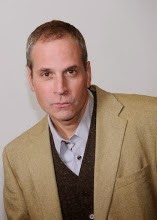
| Chantal Akerman in 2012 (photo by Mario De Munck) |
Reviewing:
I Don't Belong Anywhere: The Cinema of Chantal Akerman - documentary, directed by Marianne Lambert (Belgium, 2015, 67 minutes); and
No Home Movie - documentary, directed by Chantal Akerman (Belgium, 2015, 115 minutes)
The death of experimental filmmaker Chantal Akerman, an apparent suicide, on October 5th was a personal tragedy for her sister Sylviane Akerman, the sole surviving member of their immediate family. It was also a major loss for world cinema & the art scene in general. You should get to know Ms. Akerman, if you don't already, especially now that she can't produce any new work.
Viewing No Home Movie & I Don't Belong Anywhere at the University of Wisconsin's Cinematheque in Madison last weekend moved me. They not only gave me a deeper appreciation for avant-garde film, they also left me with a profound sympathy for a woman I'd only vaguely heard of before.
This Jewish lesbian, the elder daughter of Auschwitz survivors, was a vital humanist who made just one mainstream "commercial" movie in English, the romantic comedy & box-office bomb A Couch in New York (1997), starring Juliette Binoche & William Hurt.
Her esteem among cinephiles & adventurous critics is based primarily on a film released when Akerman was 24 years old, a mesmerizingly minimalist 201-minute study of a middle-aged woman. Bearing the prosaic title Jeanne Dielman, 23 Quai du commerce, 1080 Bruxelles (1975), it concerns a Holocaust survivor who eventually murders a man who pays her for sex.
This weird feminist masterpiece, structured in long steady takes with soft ambient sound, even influenced such notable male directors as the Austrian Michael Haneke as well as Americans Gus Van Sant & Todd Haynes. In it, Akerman used images to suggest that "the domestic lives of women are the stuff of art," according to critic & devoted fan Richard Brody (see http://www.newyorker.com/culture/richard-brody/postscript-chantal-akerman.)
Akerman was an enfant terrible, a film-school dropout who acted in her apocalyptic first short film (Blow Up My Town) at age 18. After moving to New York at age 21, she joined the circle of experimental filmmakers loosely led & sustained by Jonas Mekas. Akerman remained a determined & clever iconoclast throughout her life.
During an extensive series of interviews for I Don't Belong Anywhere - conducted in New York, Europe & (apparently) Israel - Akerman shares several revealing, provocative thoughts with fellow director Marianne Lambert. She asserts, for example, that the line between fictional movies & documentary film is necessarily fluid.
"As soon as you create a frame [for a cinematic shot], it's a fiction," Akerman points out. She always aimed "to make people feel the passing of time" in her films. The static effect can be boring, even excruciating in its refusal to tell a conventionally entertaining story. But the result rarely seems contrived or intentionally dull, as in the experimental films of Andy Warhol. Hers ring eerily true to life.
We see Akerman's theories demonstrated perfectly in No Home Movie. A poetic melancholy documentary about Akerman's affectionate relationship with her ailing mother Natalia, who died in 2014, the film drained the director emotionally. By depicting mundane conversations (some via Skype) with her beloved "maminka," Akerman gently bonds the audience to them both. Lengthy interspersed shots of landscapes, some through the window of a car, offer respite from all the understated mother-daughter drama.
Following a hostile reception after the press screening at the Locarno (Switzerland) film festival, Akerman took her own life, according to a report in Le Monde (see http://www.nytimes.com/2015/10/07/arts/chantal-akerman-belgian-filmmaker-dies-65.html?_r=0). Sylviane Akerman said that her gifted sister had been hospitalized for depression in Paris shortly before attending the Locarno event.
Acting on firm principal, Akerman refused to participate in film festivals dedicated only to works by gay, Jewish or female directors, regarding them as ghettoizing. She considered herself a nomad, as reflected in the ambiguous title of her final film, No Home Movie. In fact, she embodied the modern Jewish diaspora in microcosm by maintaining simultaneous residences in the United States, France & Israel.
Here's a sample of the sensitive, provocative voice of Chantal Akerman, from a 2011 online interview (see http://www.lolajournal.com/2/pajama.html) prompted by the release of Almayer's Folly (2011), an "ecstatic, hallucinatory yet trenchantly political" (per Brody) adaptation of Joseph Conrad's novel of the same name, shot on location in Cambodia:
"To make ‘art’ is usually wonderful. The art market is another thing. It’s often tied to power, to the phallus – but not always.
"In cinema, when you make a film, even for four people, anybody at all can enter the darkened theater; it’s democratic. In the art world, there’s an elitism that reigns sometimes that’s tied to capital. Fortunately, not always. In the Renaissance, the Medicis let Michaelangelo make revolutionary work like ‘The Slaves.’ Claude Berri, who, like my father, was a small Jew who came from leather and fur, would get up and say he was looking at his Yves Kleins. They were his. What was he really looking at, the painting or its value? Both, without a doubt; I don’t know. Ultimately, it’s touching.
"My father also started to buy paintings at the end of his life. Bad paintings, but he liked them. I find it very moving."
[© 2016 by J.C. Mrazek]
Links:
https://www.youtube.com/watch?v=GUStWsegZ0k