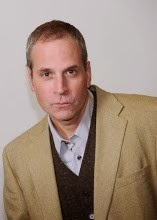
Monday, August 10, 2015

Steve Earle & the Dukes take Mad City by storm

Steve Earle plays harmonica & guitar simultaneously 

No sane, pop-musically aware person denies that Steve Earle is a great songwriter.  Several superb Americana artists have recognized Earle's genius by covering his tunes.  They make for a diverse Who's Who, from the sublime to the ridiculous:  Johnny Cash, Joan Baez, Waylon Jennings, Emmylou HarrisVince GillPatty Loveless, Travis Tritt & that achy-breaky Miley maker, Billy Ray Cyrus.

 Steve also plays his own songs brilliantly in concert.  I've now witnessed him do it twice & I can attest to the Hardcore Troubadour's enduring performance chops.  But on Saturday night (August 8th) at the Barrymore Theatre in Madison, Wisconsin (USA), Steve Earle & the Dukes blew the roof off the joint with a pair of groovy covers, both rock 'n' roll radio hits released in 1966:  Jimi Hendrix's menacing "Hey Joe" & The Trogg's riff-rich "Wild Thing."

The latter was itself a cover of a Chip Taylor song first recorded by an obscure US group, the Wild Ones, in 1965.  And it was later covered, of course, by the Jimi Hendrix Experience during their incendiary set at the 1967 Monterey Pop Festival.


cover art by Tony Fitzpatrick, a Chicago-based painter 

Steve Earle & the Dukes played a half dozen numbers from their bluesy February release, Terraplane (New West Records; produced by Ray Kennedy).  One of the finest cuts is "You're the Best Lover I Ever Had," a touching duet between Steve Earle & Eleanor Whitmore.  In his liner notes, Steve explains why he turned to the blues for inspiration on his 16th studio album:

"Hell, everybody's sick of all my f***ing happy songs anyway."

Part of what made Saturday's concert feel special was Steve Earle's charming affection for the people of Madison - or "Mad City," as he called it in one of his many brief but entertaining monologues.  Ever the gentleman, Steve said he understood long ago that we Madisonians "know what's going on."

Introducing "My Old Friend the Blues" (from his masterful 1986 album Guitar Town, which also delivered such gems as "Someday" & "Fearless Heart," which the audience also got to hear live on Saturday), Earle quipped:

"There are many remedies for the blues," Steve said.  He paused dramatically, then delivered the punchline:  "But there is no cure."

There's also no cure for idiocy.  I'm talking about that inebriated concertgoer intent on ruining the experience of others through his obliviousness.  For example, at this show I had to deal with a pair of drugged-out, talkative, gesticulating morons in the row of folding chairs ahead of mine.  I could finally take no more, so I leaned in to serve a reality check to one of those young buttheads (he was sporting a red bandana headband, no less).

"Less talk and more listening, otherwise I'll have all of you f***ers ejected.  Got it?"

Apparently he did.  After recovering from the shock of my threat, he moved up to the front row.  Even so, he was warned by ushers several times to stay in his seat instead of dancing in the aisle He finally left the show early & went outside to bother a pedicab driver.  By then, I'd already relocated to the back of the 1000-seat theater, where the volume of the music didn't quite require earplugs.

The Dukes are a tight backing unit.  On drums is Will Rigby, a co-founder of power pop pioneers the dB's.  Will has been a member of Steve Earle's crew since the turn of the century.  The giant acoustic & manly electric bass was handled by Kelly Looney, a collaborator since 1988 who now resides in France.  Opening duo The Mastersons, comprised of husband Chris Masterson (lead guitars, vocals & celebratory pick-tossing) & wife Eleanor Whitmore (fiddle, keyboards & vocals), fill out the band.

In addition to his growling baritone vocals, Steve Earle chimed in on rhythm guitar (acoustic & electric), mandolin ("Galway Girl"!) & harmonica (when possible, using a retro hand-held microphone).  He has a forthcoming memoir in 2015, the year ol' reliable Steve turned 60 (in January).  Onstage the ex-con & former crack addict mentioned that he's celebrating 20 years of sobriety this year as well.

The Terraplane was an affordable automobile, manufactured by the Hudson Motor Company from 1932 to 1938.  I advise you to take a ride with Steve Earle & the Dukes on this tour.  Their late model Terraplane blues album, featuring all original Steve Earle songs, will take you to some beautiful sonic places.  Precious few records manage to accomplish that much nowadays.

Links:
http://steveearle.com/
"Go Go Boots Are Back" (audio stream)
Twangnation 's Terraplane review & update on Steve Earle
http://www.americansongwriter.com/2015/09/steve-earle-tackles-confederate-flag-controversy-with-mississippi-its-time/

Monday, July 13, 2015

La Fête de Marquette 2015 highlights

photo by Katie Jean

Cher Anne (Director of Alliance Francaise de Milwaukee):

As promised, here's my report on La Fête de Marquette, held in Madison (Wisconsin/USA) from July 10th through 13th.  It's a fundraiser for the WilMar Neighborhood Association, by the way.  This music & food festival is set in a park carved out of the railroad corridor & post-industrial wasteland of the near east side.  There was a Ferris wheel & a prize-filled roulette wheel ($10 a spin) for additional entertainment.  The people-watching was fantastic.

A French flag hung above the stage, alongside the Texas state flag, the Wisconsin state flag & a fourth one that I didn't recognize.  Maybe Quebec's provincial flag?  I didn't attend the opening Thursday night.  Two bands played on the Main Stage:  The Lost Bayou Ramblers (folk-sounding) & The Revivalists.  Meanwhile, a Willy Street Co-op members meeting was held in the tent.

On Friday night New Orleans native Ivan Neville played with his funk band Dumpstaphunk.  When I lived in the Crescent City (1980s), I met Ivan's cool uncles Aaron & Charlie Neville & his sweet cousin Charmaine Neville - all of whom are also musicians (The Neville Brothers, etc.).  Johnny Chimes (cool name,non?) played La Bistro Tent Stage.  Again I didn't attend, but I heard Dumpstaphunk from my backyard a few blocks away.  We grilled out with a visiting friend, a Swiss native who now lives in Hawaii.

Saturday's line-up was appealing, but I only attended briefly at night, when it was cooler.  Robin PluerMrs. Fun and The Cajun Strangers played the tent stage - I heard the latter & they played good dance music with Cajun-French lyrics.  Jeffrey Broussard & the Creole Cowboys played on the main stage, followed by Feufollet, Jon Cleary & the Absolute Gentlemen and the great Louisiana bluesman Sonny Landreth.  I ate some pasta Bolognese & pad thai & drank good local beer, as good beer fans are wont to do.

Finally, on Sunday afternoon I worked the WORT-FM (community radio) booth, selling t-shirts & CDs, taking inventory & handing out listener questionnaires from noon till 2:00.  Performers included the Ótimo Madison Brazilian Dance troupe,BelOLoJoParis Combo & the headliner:  the irrepressible zydeco bandleader CJ Chenier & the Redhot Louisiana Band.

How was the Bastille Days festival in Milwaukee?  I've loved watching Robin Pluer sing Edith Piaf songs there in the past.  Not to mention eating those delicious apple tarts!
Truly,
Joe Crawford Mrazek
a/k/a Muse of the Weird

Thursday, June 25, 2015

Toe-tappin' tunes & swingin' lessons in jazz history: 2015 Isthmus Jazz Fest highlights


Esperanza Spalding with her instrument 

Madison (Wisconsin/USA) music fans were treated to several groovy events during last weekend's Isthmus Jazz Fest on the Terrace.  Here are my quick takes on the four most memorable events & gigs that I attended.

ONE
The Girls in the Band:  finally, a documentary film about some key women in jazz history

Ever heard of saxophonist Roz Cron?  Trumpeter Clora Bryant?  Jazz pianist Toshiko Akiyoshi?  Regretfully, neither had I.  This 2011 documentary film, produced & directed by Judy Chaikin, schooled me in a long neglected subject, namely women players (as opposed to singers) who made a mark in the history of jazz.  It covers the topic comprehensively, from the big band-based Swing era to today. 

The audience at the Friday evening (June 19th) screening in the UW Memorial Union's Frederic March Play Circle was - to put it kindly - select.  Serious fans of American music must see this engaging blend of interviews & live performances. Moving from the grainy, black & white 1930s into the digital-color 21st century, these ladies could swing hard.  And many of those profiled, including Diana Krall & Esperanza Spalding, still do.

With the new Nina Simone documentary, What Happened, Miss Simone? by filmmaker Liz Garbus, hitting theaters this weekend, the subject (female innovators & civil-rights heroines in jazz & soul music) remains timely.

TWO
Pop & Jazz - When Worlds Collide, a performance talk by Dave Stoler & friends

Yet another substantial treat for a non-musician music-writer like me, this lecture by professorial pianist Dave Stoler was both enlightening & fun.  Joined by sax-playing singer Al Falaschi, bassist Jon Christensen & drummer Jamie Ryan, Stoler offered six songs as exemplars of the happy collision of the usually divergent pop & jazz genres:

1. "I Got Rhythm" - this 1930 show tune by George Gershwin soon transcended Broadway with its lurching rhythms & catchy chord changes.
2. "Caldonia" - a jump blues (proto-rock 'n' roll) sensation for Louis Jordan & the Tympany Five in 1945.
3. "Nature Boy" - a breakthrough hit for Nat King Cole in 1948 (written by Eden Ahbez).
4. "Yesterday": The Beatles' 1965 smash hit that Stoler said shows Paul McCartney's jazz influence.
5. "Moondance" - Van Morrison's 1970 album chestnut, with a modal sound derived from Miles Davis's "So What?" 
6. "You Are the Sunshine of My Life" - Stevie Wonder's 1973 chart-topper features jazz-based harmonies by one of the coolest cats on record.

Stoler holds a Masters degree in jazz-piano performance & he plays with several jazz outfits, including his own trio as well as the Tony Castañeda Latin Jazz Band & Madison's Donald Fagen tribute band Steely Dane.

THREE
Meet Freddy Cole, Gentleman Jazzman - Stories & Jokes in the Play Circle

Nat King Cole's younger brother isn't too hip to admit that he digs "toe-tappin' tunes."  In other words, he prefers dance music, as jazz primarily used to be.  Cole became an international star by virtue of the baritone singing & piano playing on display in his funky Freddy Cole Sings orchestral album (UK, 1976).  The 80-something gentle, elegant Grammy nominee entertained a small audience in the Play Circle with his stories & jokes for nearly an hour. 

Looking sharp in a dark blue pinstriped suit, Cole chided musicians who disrespect their audiences by not dressing well for the occasion. Cole was interviewed by the musically gifted & genuinely curious host Chris Wagoner, president of the Madison Music Collective. A jazzman who understands the value of measured pleasures, Cole released his first album in 1952 (a 78-rpm record). 

"My first big break was being born," Cole said.  "I made it because I earned the respect of my peers."  A resident of Atlanta since 1972, Cole was raised in Chicago, where his mother sang gospel & his father preached.  After the talk I thanked him & shook his hand.  It was an intimate conclusion to a heartwarming event.  I only wish I could've attended his Saturday evening concert.

FOUR
Tony Castañeda Latin Jazz Band: a perfect finale on the UW's Memorial Union Terrace

Tony Castañeda is a serious conga-player & bandleader, but he loves to joke around with his audiences. He was in fine fun-loving form on Saturday evening (June 20th) at the Terrace.

"Were ya gettin' tired?" he asks a couple who'd just enjoyed a long salsa dance number.  "Sorry," Castañeda explains, "but all our songs are nine minutes long.  That's because it's jazz, man." 

The rotating lineup that evening featured guest trombone player & former TCLJB regular Darren Sterud (The Jimmys), longtime saxophonist Anders Svanoe, Roberto Rengel (also in Grupo Candela) on timbales, Henry Boehm on bass & the inimitable Dave Stoler on keyboards.

On a Saturday when storms threatened to put a damper on the outdoor gigs, the skies cleared & the sunset cast a magic glow over Picnic Point & the Lake Mendota horizon.  An appreciative crowd of several hundred listeners joined Tony in embracing that line by gonzo writer Hunter S. Thompson "Good people drink good beer."

Meanwhile, pianist/singer Freddy Cole was playing Shannon Hall (formerly the Memorial Union Theater) with the UW Jazz Orchestra.  Generous as ever, Castañeda plugged Cole's competing gig, noting that tickets were still available.  

Maybe next year the organizers will let Tony Castañeda's band close the Isthmus Jazz Fest.  This year that honor went instead to the impressive Stan Kenton-inspired Sixties-style Neophonic Jazz Orchestra, a tightly arranged outfit of local jazz veterans.

[© 2015 by J.C. Mrázek]

LINKS:
Tony Castaneda Latin Jazz Band (May 2014 performance - Cardinal Bar, Madison):  https://www.youtube.com/watch?v=3rIeFcBd1k4


Monday, June 1, 2015

A tale of two museums: 1915 centenaries inspire a pair of cool cultural events in southeastern Wisconsin this spring


I attended a pair of noteworthy museum events just north & south of Racine last month. Here is my report, along with some commentary. This blog-post should appeal to (1) military history buffs, (2) large-format lithograph poster aficionados, (3) old-time radio devotees, (4) classic movie buffs & (4) fans of the illustrious Orson Welles (1915-1985), a Kenosha native.

Orson Welles, 1937 (photo by Carl Van Vechten)
Part One:

Wednesday afternoon at the Charles Allis Art Museum: Marquette professor explains how French propaganda posters arose from the hope & horrors of World War I.

The Alliance Francaise de Milwaukee (AFM) sponsored another fine cultural event on May 6th. This one took place at the Charles Allis Art Museum, housed in a grand stone mansion on Milwaukee's eastside. Along with a generous buffet of bread, paté, cheese, veggies, sweets & a variety of French as well as Italian wines, AFM served its five dozen guests an informative cautionary lecture on European history & art. [Thanks to AFM executive director Anne Leplae for her exceptional hospitality & charm.]

The 15 propaganda posters on display are sepia-toned artifacts of a proud nation at war. They include two works by Théophile Steinlen (1859-1923), better known for his art nouveau cat images. For example, Steinlen's spare Journée de Regions Liberées (1919) depicts a crow resting on a crucifix overlooking a graveyard covered with spring greenery.

These 45-inch by 31.5-inch lithographs were gathered during the war by Milwaukee philanthropist Harriet Earling Fitch, whose work focused on the care & support of millions of fatherless children. They were donated by the family of Thomas Van Alyea Jr. The art is on display in the museum's Margaret Fish Rahill Great Hall.

Intended to raise both morale and money (i.e. bond-based loans) for the French war effort, these images are especially poignant in retrospect. An untitled 1917 color portrait by August Leroux (1871-1954), depicts an idealized intimate family moment: a bearded, helmeted soldier hoists & embraces a pale young girl whose almond eyes implore the viewer, while a woman nurses an infant in the monochrome background.

This year marks the centenary of several brutal battles of the so-called Great War (1914-1918). Marquette University history professor Julius R. Ruff offered a harrowing glimpse into an earlier one that afternoon at the Allis. The First Battle of the Marne lasted from September 5th until the 12th of 1914. Although it halted the alarming German advance towards Paris, an estimated 250,000 French soldiers were either killed or physically wounded in that bloody week alone. Countless others, including unlucky civilians, were psychologically damaged for life by having witnessed the loud furious gas-bomb slaughter.
Charles Peguy, French writer & combat casualty in 1915


Among the casualties was a noted poet, essayist & editor named Charles Péguy (1873-1915), who caught a bullet to the forehead. Over two million soldiers of various armies participated in the Battle of the Marne. It dampened hopes for a short & glorious war. Perhaps more ominously, the Battle of the Marne saw the first decisive use of reconnaissance aircraft in warfare. Small squadrons of those flimsy, vulnerable early bi-planes helped the Allies by discovering weak spots in the German lines.

If art can instruct as well as inspire us, we would be wise to heed the anti-war imagery of such humanistic artists as Käthe Kollwitz. Here is her simple post-war indictment in the form of of a lithograph, Mothers (1919):  http://www.kaethe-kollwitz.de/werkschau-en_14.htm.
Part Two:

Saturday afternoon at the Kenosha Public Museum: Orson Welles's War of the Worlds 1938 CBS radio broadcast discussed by Michigan author, then re-enacted by a local amateur troupe.


To commemorate the centenary of George Orson Welles' birth in Kenosha (May 6, 1915), the Citizen Welles Society of Kenosha organized several events in honor of the multi-talented artistic genius.

Mercury Theatre on the Air, a CBS version of director/actor Orson Welles & producer John Houseman's stage company, broadcast the legendary War of the Worlds radio drama on October 30, 1938. The Sunday evening (8:00 pm EST) show, an adaptation of the 1898 British sci-fi novel by H.G. Wells (1866-1946), had a vast national audience. It was such a credible fake, structured as a live-music show interrupted by increasingly scary news flashes, that it sparked a panic among listeners who missed the introductory disclaimer.

Thinking the Earth was being destroyed by creepy reptilian invaders crawling out of futuristic Martian spacecraft, people fled the cities or called flummoxed authorities for help. Michigan-based scholar A. Brad Schwartz, author of Broadcast Hysteria: Orson Welles's War of the Worlds and the Art of Fake News (Farrar, Straus & Giroux, NY: 2015), completed the picture. 

In response to my question, Schwartz said it's a myth that the radio show caused several deaths. He said that no credible evidence has yet been presented to prove a causal connection between the War of the Worlds broadcast & any listener deaths.  There followed, however, the deadly case of the February 1949 War of the Worlds broadcast in Quito, Ecuador. Enraged upon discovering that the show was merely an artistic deception, an angry mob attacked & burned the radio station, killing at least six people.

Welles painted spellbinding word-pictures. His compelling baritone voice even convinced many in his 1938 North American audience that the world was under Martian attack. On Saturday May 9th, RG Productions presented their re-enactment of that historic broadcast, starring Ed Godula as actor-director Orson Welles. It was fun to watch the sound-effects crew make auditory magic.

Enhancing the Orson Welles celebration for adults, Public Craft Brewing Co. released Public Hysteria, their refreshingly bold American Pale Ale (6.5% ABV), on May 8th. Surely Welles, a notorious imbiber & gourmand, would have approved of that tribute.

Movie Tip: Check out Me and Orson Welles (2009), directed by Richard Linklater & featuring an eerily spot-on performance by Christian McKay as the 22-year-old Welles directing & starring in his modern-dress, fascism-themed production of Shakespeare's Julius Caesar. Based on the novel of the same name by Robert Kaplow, this comedic drama exquisitely captures Manhattan in autumn 1937. I found it more entertaining & artistic than Linklater's Oscar-winning film Boyhood (2014). I watched it at a special screening at the Kenosha Public Library on May 13th, followed by a live telephonic discussion with Kaplow.

Links:

Tuesday, May 5, 2015

Mad Men scene set in Racine (WI), my hometown

Dear Media Consumers:
How will Real Racine exploit last night's episode of Mad Men (AMC TV drama, now set in 1970) to promote our hometown?  Jaded adman Don Draper's mention of driving straight through from New York to "Racine, Wisconsin" - plus that weird scene purportedly set in a house here - offers loads of opportunity for local boosters. 

I'd suggest a new public-art contest for downtown.  Entrants would simply draft an ad campaign that draws on the rebel spirit of the Sixties, while providing a vaguely positive slogan that encourages techno-consumerism.  My entry:  Racine:  Make the Scene, Be the Meme.  Selfie op!

Ironically,
Joe Crawford Mrazek
Racine, WI (U$A)

Wednesday, April 22, 2015

Happy Earth Day 2015


Gaylord Nelson, Wisconsin native & founding father of Earth Day, liked to joke before public speeches:  "As Henry the Eighth said to Anne Boleyn, 'I won't keep you long.'"  

On this 45th anniversary of the first nationwide environmental teach-in, I'll make it sustainably brief.   

"We're standing knee-deep in garbage, throwing rockets at the moon."
- troubadour & activist Pete Seeger

"The economy is a wholly owned subsidiary of the environment, not the other way around." 
- Gaylord Nelson

Happy Earth Day to all sentient beings who share our weird & wonderful world!

Tuesday, March 31, 2015

Charlie Hebdo is our friend: French journalist Zineb El Rhazoui speaks in Chicago


On March 26th the Alliance Francaise de Milwaukee presented a webinar to a small audience about the Paris-based satirical weekly paper Charlie Hebdo.  It inspired me to wear a "Je suis Charlie" button for the first time.  Amidst news of fresh attacks on civilians in the Arab world & renewed threats against outspoken journalists everywhere, Charlie Hebdo stands tall - he just keeps on publishing.

For those of you living in a cave, the offices of Charlie Hebdo (relaunched in 1992) were brutally attacked on January 7, 2015.  Two radical Islamist gunmen killed twelve Charlie Hebdo staff-members as well as a pair of French policemen.  The state had sent police officers to guard the  premises following a firebombing in late 2011.

As a matter of fact this event, hosted by the University of Chicago & co-sponsored by Alliance Francaise & the French consulate of Chicago, was postponed due to terrorist threats against the speaker, Charlie Hebdo's religion correspondent Zineb El Rhazoui.  Addressing a large & lively academic crowd in the Windy City in late March, Rhazoui gave a moving & uncompromising defense of free speech - even when its fruits offend some readers.

Arguing that the so-called Free World cannot ban "blasphemy" without undermining the principle of freedom itself, Rhazoui asserted that papers like hers have a duty to criticize society's foibles & delusions.  Their work is meant to make readers feel uncomfortable, she explained.

Hired by Charlie Hebdo in 2009, when the revolutionary Arab Spring movement was in progress, Rhazoui noted that an Algerian native named Mustafa was killed in the January attack simply because he worked for the paper.  A native of Morocco herself, Rhazoui was forced into exile as a result of her feminist activism & outspoken stance against the regime of that kingdom on Europe's doorstep.  She said that the large & diverse Muslim community in France, including the policemen Abdul who was also killed that sad day in January, is well established but only partially integrated into French society.

Rhazoui is fearless.  Having studied Islam for 16 years, she wrote a biography about the Prophet Muhammed.  She claimed that the Koran does not forbid depictions of the Prophet - despite what ideological extremists may claim when justifying the assassination of political cartoonists or documentary filmmakers (e.g. Theo van Gogh in Holland in 2004).  State religion, such as is found in Saudi Arabia or the fledgling ISIS "caliphate" in Syria & Iraq, necessarily becomes oppressive & barbaric, she argued.

Rhazoui  took to task those newspapers (including some commenters in The New York Times & The Washington Post) that criticized Charlie Hebdo.  She said that by suggesting Charlie Hebdo's editors provoked the January massacre by publishing crude assaults on Islam, these Western papers failed to grasp the fundamental value of a free press.  She said that many people have a misinformed image of the Parisian paper, noting that there have been only three covers featuring anti-Islamist-extremist subjects in its 30-odd years of existence.  The first cover after the attack featured a brilliantly simple cartoon of Muhammed holding a sign reading "All is forgiven, I am Charlie."

Calling the Kouachi brothers, the self-described "Muslim" gunmen who murdered her colleagues, merely "stupid," Rhazoui instead blamed the hateful ideology that inspired them.  Yet she also displayed compassion towards the fanatical killers, forgiving them for the attack on fellow French citizens.  Charlie Hebdo's circulation jumped from 10,000 to over 200,000, as support from media & free-speech advocates poured in from around the globe.  An impassioned Rhazoui lamented the loss of her "intelligent" colleagues at the hands of armed zealots.

The French reporter, whose English is quite good, was introduced by University of Chicago law professor Geoffrey Stone, who reminded the audience that free expression is important because, in part, it helps further democracy by requiring tolerance & civility.  Would-be censors dwell in high places in every society, Stone noted.  They must be resisted constantly, even in the USA.

As Supreme Court Justice Louis D. Brandeis wrote, "The greatest dangers to liberty lurk in the insidious encroachment by men of zeal, well meaning but without understanding."  And he wrote this: "It is the function of  free speech to free men from the bondage of irrational fears."  That's why I'm proud, as an American born in West Germany, to display my "Je suis Charlie" button.