Showing posts with label Cold War. Show all posts

Monday, June 23, 2014

My beer with Victor Grossman: US Army defector turned (East) German Journalist speaks in Milwaukee


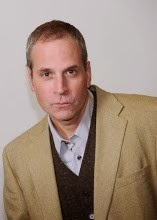
On Fathers Day (June 15th) at the co-operative (i.e. drinker-owned) bar Riverwest Public House in a diverse Milwaukee neighborhood, I met Victor Grossman.  Born Stephen Wechsler to fervently Communist parents in New York, Grossman is an 86-year-old Jewish freelance journalist & a longtime resident of Berlin.  As a United States Army soldier stationed in Bavaria in 1952, Wechsler defected to the Soviet side after swimming across the Danube River to Austria. 

His rather grandiose pseudonym (which means "victor big-man"),  he said, was suggested to him by his Communist handlers.  Grossman, a reluctant draftee, said that he defected due to his (well-founded) fear of prosecution by the US military for having lied on his loyalty affidavit, a document asserting that he had never been a Communist.  A unique double alumnus of both Harvard University & Karl-Marx-Universität (Leipzig, Germany), Grossman proved his stamina as a lecturer by speaking for over two hours.  The audience of about three dozen, most of whom were - judging by the questions asked - old-school lefties, ate up the bland goulash of facts & commentary that Grossman was serving with nostalgic relish.  


First, some background information:  the Deutsche Demokratische Republik (DDR) was created by the Soviet Union during Stalin’s post-war re-organization of rump eastern Germany, mainly in order to counter the United States of America’s democratic-capitalist creation, the Bundesrepublik Deutschland (BRD), aka the Federal Republic of (West) Germany.  With the help of the Marshall Plan (which Grossman described as a “plot” to undermine Soviet influence in post-war Europe), West Germany began a steep rise to relative wealth & comfort for the majority of its citizens - many of whom were fleeing the DDR by the late 1950s.  


By contrast, the DDR’s economy struggled to provide most consumer goods, having received no corresponding financial assistance from its war-depleted Communist “brothers” in Moscow.  Among Grossman’s many interesting state jobs was working as chief archivist at the Paul Robeson Archive in East Berlin.  In 1968 he became a full-time freelancer & author - publishing Rebel Girls, his populist-feminist American history in German, and Crossing the River, a memoir in English, among other books.  After the DDR regime was toppled by a peaceful popular uprising in the fall of 1989, writing assignments became more infrequent for this man with a suddenly unfashionable résumé .  


The nominally socialist DDR was far from the egalitarian workers’ utopia its manipulative leaders constantly claimed to be approaching.  The DDR’s Sozialistische Einheitspartei Deutschlands (SED, or Socialist Unity Party) leadership had the disadvantage of being adjacent to the bigger, wealthier & more glamorous West Germany.  Nevertheless, they built an economy so successful that East Germany’s standard of living was comparable to Great Britain’s by the mid-1970s.


“I saw a country with everything against it,” Grossman said of the DDR in the 1950s, “but they achieved alot.”  He cited the fact that the East German government provided free medical care, job security & a state-paid university education for qualified students of any background - so long as they didn’t rock the boat by questioning authority too loudly or persistently.  Grossman himself apparently didn’t question much about his adopted homeland’s lousy human-rights record.  


For example, he said that the forced expatriation of East German poet-singer Wolf Biermann in 1976 was a set-up by Biermann & some fellow dissidents, conspiring with their West German sympathizers, who wanted to embarrass the DDR.  No doubt he also accepted the DDR’s official justification of the Berlin Wall as “an anti-fascist protection wall.”   In fact, it was erected in August 1961 in order to deter DDR citizens from fleeing to the West.


Grossman did at least complain about the intellectually inert ideological clichés of Communist media discourse.  No wonder most East Germans tuned in to Western media - including US-sponsored radio & West German television - instead of enduring the DDR's dull & meager media offerings.


Interjecting opinions on current events in Europe& the United States, Grossman discussed his life as a journalist in East Berlin.  He hosted an American folk-music program on Radio Berlin International, an organ of official state propaganda, during the height of the Cold War (the early 1960s).  The glory years of the DDR, better known to Americans as Communist East Germany (1949-89), ended in the late 1970s.   By then the DDR government was “selling” political dissidents to West Germany in exchange for the coveted hard-currency Deutschmark.  


Based on the evidence gleaned from his long-winded talk in Milwaukee, Grossman not only drank the spiritually toxic kool-aid of Communist propaganda as a red-diaper baby of the Great Depression, he helped mix & serve it as a prominent journalist & media personality in the DDR.  He perpetuates much of the DDR’s self-justifying malarkey to this day, now as an active member of Die Linke (aka die Linkspartei, or Left Party), the fourth largest political party in re-unified Germany, combining former members of the mercifully defunct SED with some breakaway social democrats. 


For all his faults, Grossman still seems like a mensch, a decent guy to talk with over a beer.  He said that he injected a surprising sense of humor into his DDR reportage & commentary.  Four decades spent living under the deadly serious East German regime apparently did little to stunt his wit.  He credited his late wife Renate, an East Berliner, as the person who “made the difference in my life.”


From a journalist specializing in topics related to the USA, Grossman has gone on to write & speak with authority on such topics as European migrants & the neo-fascist backlash, NATO military intervention as well as social & economic justice movements.  


Best of all for me, he knows Bettina Wegner, my favorite DDR singer-songwriter, and he met Angela Davis in her glory days.  A radical American professor & activist, Davis became a popular sensation in the ’70s Communist bloc following her acquittal by an all-white California jury on kidnapping & murder conspiracy charges.  She was awarded the prestigious Lenin Prize, among other honors in the USSR & the DDR.


In the May 15th issue of his detailed blog-like Berlin Bulletin, Grossman quotes the trade-union leader & co-president of Die Linke, Berndt Riexinger:  “To be a leftist means to squarely face the people, life and the future.”  If only it were that simple, Herr Grossman.  It certainly wasn’t true of the DDR’s bullying leaders - until it was too late to reform their corrupt, inhumane system.  The DDR died a sudden & ignominious death, precisely the end it deserved.


NOTE:  The English-language Berlin Bulletin is available for free via email by writing Grossman at:  wechsler_grossman@yahoo.de.  [© 2014 by J.C. Mrazek] 


Wednesday, February 26, 2014

Back from the USSR: Lee Harvey Oswald, Antihero (a Conspiracy-free Theory)


Don't worry:  I'm not one of those Kennedy-assassination conspiracy theorists.  I acknowledge that diligent investigators (including the 1964 Warren Commission's) and credible forensic scientists have established beyond a reasonable doubt that Lee Harvey Oswald acted alone in murdering the president on that sad, sunny Dallas day in November 1963.  Yet I admit that there was a string of pretty weird coincidences in this case. 

A new book has satisfactorily answered most of my lingering questions about the killer.  Oliver Stone, perpetrator of the 1991 paranoid fantasy film JFK, might be disappointed by what its author discovered about that homicidal nudnik named Oswald.  Jacob Rubenstein, a nightclub owner who preferred to be called Jack Ruby, may have sincerely meant to avenge the dead president by firing a bullet into his assassin.  Unfortunately, by killing that smirking self-proclaimed "patsy," Ruby - the hotheaded agent of retribution - merely enhanced Oswald's mystique.

In his brief but meticulously researched study, The Interloper:  Lee Harvey Oswald Inside the Soviet Union (NY:  Basic Books, 2013), journalist Peter Savodnik presents a convincing account of the damaging circumstances of Oswald's life, as well as the dangerous quirks of his alienated psyche, that led the ex-marine to take such violent action.  

Ironically, within a month of moving back to Dallas in March 1963, the confused "Marxist" attempted to murder ex-general Edwin Walker, who'd been forced into early retirement by JFK.  Oswald just missed the right-wing extremist Walker, using the same Carcano 6.5-mm bolt-action rifle that he later used to fatally shoot Kennedy, simultaneously wounding Governor Connally.  Then, in a futile attempt to evade arrest, the cowardly Oswald shot Officer J. D. Tippit dead with a handgun.   

A reporter formerly based in Moscow, Savodnik pays particular attention to the two and a half years that the future assassin spent in the Soviet Socialist Republic of Byelorussia (since 1991, the independent state of Belarus, still a de facto dictatorship).  By all eyewitness accounts, Oswald was a lazy, disgruntled metal lathe operator at the Minsk Radio Factory to which the Soviets assigned him in January 1960.  

The public's fascination with Oswald partly stems from the fact that he was one of only eleven Americans who defected to the USSR between 1958 and 1964, perhaps the tensest period of the Cold War.  After a meandering journey - by freighter from New Orleans to France, followed by a flight from London to Helsinki - Oswald entered Russia from Finland by train on October 15, 1959.  

He was carrying a one-week tourist visa in his passport and not much else.  After the Soviet authorities denied his immediate request to stay and seek citizenship, Oswald made a suicidal gesture at the Moscow hotel where his puzzled handlers were keeping him.  Ultimately, after giving interviews to American and Soviet reporters, Oswald was granted a residence permit.  

It was either an impressive accomplishment or a stroke of luck, considering that the KGB had already determined he had zero intelligence value.  Despite a stint as a radar operator at Atsugi Air Base, which controlled U-2 spy-plane flights to and from Japan, Oswald offered no information unknown to the Soviet military.

So how did this traitorous, failed Communist interloper gain re-entry to the USA without facing criminal charges?  After all, Oswald had tried to renounce his American citizenship at the US embassy in Moscow.  He had eagerly cooperated with his disappointed KGB interrogators.  Although the Soviet government was glad to see this unstable foreigner finally leave in mid-1962, his defection had initially given them a propaganda coup.  

In an absurd twist of fate, the superpowers' public-relations battle allowed Oswald to escape punishment by either side.  His sudden marriage to Marina Prusakova in 1961, and the subsequent birth of their first daughter in Minsk, probably helped expedite his reverse-exodus.  After several months of bureaucratic delay (the main obstacle was posed by the Immigration & Naturalization Service, which understandably questioned Oswald's loyalty), American authorities reluctantly granted entrance visas to Mr. and Mrs. Oswald in May 1962. 

Apparently afraid of appearing to be less hospitable and forgiving than the Soviets had been to him, US officials also gave Oswald a $435.71 repatriation loan, documents show.  The State Department's generosity allowed him to travel with his new family - albeit modestly, by train and ship - from Moscow to New Jersey via the Netherlands.  

Savodnik asserts that the solution to the now 50-year-long Oswald enigma (i.e. why did he kill JFK?) is rooted in his having been, essentially, a delusional Cold War antihero.  It's as good an explanation as any I've come across.  "Oswald was an ordinary man," the author notes, "but he was also exceptional, and not just because he killed a president."  

"Once [the USSR government] capitulated to his demand that he be allowed to stay in the Soviet Union, he was elevated, almost magically, with a great and sudden force," Savodnik writes.  "For the first time, he had done something that most other men could not have imagined doing:  he had convinced the KGB to let him stay in their country. . . He was not a sympathetic character, but he had admirable traits - perseverance, concentration. . . He had done something profound."  

"In any event," Savodnik concludes, "it is hard to imagine any other type of American besides the would-be antihero venturing to the Soviet Union in 1959 and mustering the will to stay there for as long as Oswald did.  This was the quintessential antiheroic experience of the period, the bridge that the loner or rebel would have had to cross in order to detach himself fully from his beginnings. [. . .]  Ironically, Oswald's antiheroism appears to have contributed to his feelings of estrangement not only from America but also, eventually, from the Soviet Union."

Case closed?  Don't count on it.  Conspiracy theorizing is an insidious hobby, a hard habit for obsessive types to break.  Especially when it involves the slight, miserable 24-year-old murderer who sealed the myth of Kennedy's Camelot on the Potomac.  In retrospect, the US government should not have been so welcoming to that ungrateful un-defector.  With a few shots from his cheap rifle, sent by mail-order from Klein's Sporting Goods in Chicago, Oswald changed history. 

All the available evidence, including the now unclassified KGB files, indicates that Oswald was not serving the USSR - or Castro, the Mafia, the CIA, some military-industrial cabal, LBJ, or anyone but himself - when he aimed a powerful weapon through the open sixth-floor window of the Texas School Book Depository.  He certainly wasn't doing his fellow Americans any favors.